
Have you ever wondered why your hair still feels dry and frizzy like withered autumn grass despite careful care? Behind this lies a key trait that many people overlook—hair porosity. Understanding this characteristic of hair, especially the unique characteristics of low porosity hair, is the scientific key to unlocking effective care and saying goodbye to dryness troubles.
The phenomenon of dry hair has complex and diverse causes, not just a single factor. Fundamentally, it may stem from non-pathological natural dry hair, or it could be related to pathological factors such as tinea capitis, malnutrition, and anemia. However, such pathological causes are relatively rare; more often than not, dryness is closely linked to daily living habits. Improper care methods often play a significant role. For example, using alkaline shampoos can easily disrupt the scalp's water-oil balance, leading to frizzy hair, while frequent perming, coloring, and excessive sun exposure can directly damage the cuticles on the hair surface, robbing it of its natural luster and elasticity. In addition, a lack of essential nutrients such as protein, zinc, and calcium in the body can leave hair dry and brittle due to the loss of growth support. These internal and external factors interact, jointly damaging the healthy structure of the hair and causing dryness to recur.
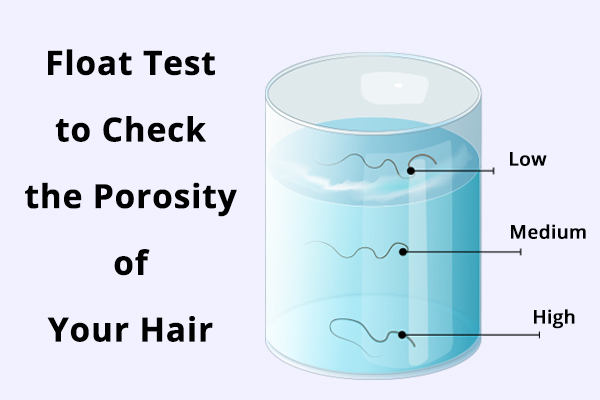
To find a targeted care plan, we must first gain a deep understanding of "hair porosity." Essentially, this term refers to the hair's ability to absorb and retain moisture, with the core lying in the condition of the cuticles—the outermost layer of the hair.
You can imagine the cuticles as overlapping roof tiles; the tightness of their arrangement directly determines how easily moisture and nutrients can enter and exit the hair shaft. Based on the arrangement of the cuticles, hair is roughly divided into three porosity types: high, medium, and low, each with distinctly different care needs.
Among them, low porosity hair has extremely tight, even overlapping and closed cuticles, like a tightly locked door that is hard to open. This special structure has its advantages: it makes the hair relatively resistant to external damage, less susceptible to direct harm from wind, sand, and ultraviolet rays. However, it also forms a natural barrier that firmly blocks moisture and nourishing ingredients from most hair care products outside the hair shaft. Just as rainwater falling on a well-sealed roof only forms droplets and rolls off without penetrating into the house, when low porosity hair comes into contact with water, the moisture only stays on the surface and is difficult to be absorbed deeply into the hair. This is the fundamental reason why such hair still feels dry even with frequent moisturizing care, and why hair care products tend to accumulate on the surface, leaving the hair dull and lifeless.
What is even more easily overlooked is that the dryness problem of low porosity hair can be further exacerbated by people's misunderstandings and improper care. Due to the tight closure of the cuticles, many people fall into the misunderstanding that "the thicker the texture, the better the moisturizing effect." They blindly choose heavy oil-based products and high-protein hair masks, trying to alleviate dryness through "intensive nourishment." In reality, the molecular size of such products is too large to penetrate the closed cuticles; they only accumulate on the hair surface, forming a thick film.
This film not only makes the hair look greasy and flat, losing its lightness, but also clogs the already narrow gaps between the cuticles, making it harder for subsequent moisturizing ingredients to penetrate, creating a vicious cycle of "the more you care, the drier it gets."
At the same time, long-term accumulated product residues can also rob the hair of its natural elasticity, making it stiff and prone to breakage, further worsening the appearance of dryness and frizz. In addition, the dryness of low porosity hair is closely related to the particularity of moisture loss. Although the tight cuticles can to a certain extent reduce the rapid evaporation of internal moisture, the initial moisture absorption is insufficient, so the hair itself stores very little moisture. Once exposed to external stimuli such as heat styling and ultraviolet radiation, the limited moisture is quickly consumed, making the dryness problem more pronounced, and even leading to more serious issues such as split ends and breakage.
After recognizing the core contradiction of low porosity hair—"hard to absorb, easy to accumulate"—the care approach to improve dryness becomes clear. Its essence lies in "guiding penetration" rather than "forced nourishment," opening up absorption channels through scientific methods while avoiding product accumulation.
The primary principle is to choose and use appropriate care products correctly. Given the characteristics of low porosity hair, one should resolutely avoid products with thick textures and high oil content, and instead opt for lightweight products with small molecules.
Cleansing is the foundation. It is recommended to use sulfate-free mild shampoos, which can effectively clean dust and residues on the hair surface without excessively stripping the natural oils of the scalp and hair, protecting the hair barrier from damage. At the same time, a mild clarifying shampoo can be used regularly to deeply remove long-term accumulated product residues, slightly opening the cuticle gaps to prepare for subsequent nutrient absorption.
When choosing conditioners and hair masks, priority can be given to products containing ingredients with good permeability such as aloe vera and jojoba oil, which are better suited to the absorption needs of low porosity hair.
A crucial tip when using deep care products is to use heat assistance—for example, wrapping the hair with a warm towel or wearing a professional heating cap. Gentle heat helps slightly open the closed cuticles, promoting the deep penetration of moisture and nutrients into the hair shaft. Afterward, rinsing the hair with cool water helps the cuticles close quickly, firmly locking in the newly added nutrients and doubling the care effect.
In addition, the frequency of washing should be reasonably controlled; daily washing is not necessary. Washing 2-3 times a week, or flexibly adjusting according to the oil secretion of the scalp, is sufficient. Over-washing will only disrupt the scalp's water-oil balance and worsen dryness.
Adjusting daily care habits is also crucial, as it directly affects the health of the hair. Controlling heat during blow-drying and styling is particularly important. One should try to avoid blowing the hair with high-temperature hot air for a long time. When using a hair dryer, it is recommended to set it to medium-low temperature and keep a distance of at least 20 centimeters to avoid direct high-temperature stimulation of the cuticles, which prevents them from closing completely due to excessive heat and further hindering moisture absorption. Before blow-drying, an appropriate amount of heat protectant spray can be applied to add a protective barrier to the hair.
When combing, prioritize using a wide-tooth comb, and do so when the hair is damp and has conditioner applied. This can effectively reduce friction between the comb teeth and the hair, minimizing physical damage and preventing cuticles from being damaged or falling off due to pulling.
Perhaps unexpectedly, details during sleep can also affect hair condition. Using silk or satin pillowcases can significantly reduce friction between the hair and the pillowcase during nighttime sleep, reducing moisture loss and cuticle damage, and helping to maintain the hair's smooth texture.
In addition to external care, internal nourishment is the fundamental solution. Hair is mainly composed of keratin, and a balanced diet provides a solid material foundation for hair growth. Daily intake of sufficient protein, iron, zinc, and other trace elements—such as lean meat, eggs, nuts, and fresh fruits and vegetables—is particularly crucial for improving dryness caused by malnutrition, nourishing the hair from the root and making it strong and shiny.
In fact, low porosity hair is not "difficult to care for." Its tight cuticles are a natural protective barrier for the hair, making it more resistant to external damage; it just requires us to identify the core logic of care. Dry hair, especially that caused by low porosity, is not an insurmountable problem. It requires us to move beyond one-size-fits-all general hair care routines and instead listen to the signals sent by the hair itself, adjusting care methods according to its unique characteristics.
By scientifically understanding the structural characteristics of low porosity hair and following the care philosophy of lightweight penetration, proper use of heat, minimizing damage, and internal and external maintenance, we can fully guide the "tightly closed cuticle door" to open moderately, allowing nourishing ingredients to truly penetrate deep into the hair shaft and break the cycle of "the more you care, the drier it gets." As long as we adhere to scientific care and balance external nourishment with internal conditioning, low porosity hair can get rid of dryness troubles, gradually regain moisture, luster, and flexibility, and ultimately achieve healthy, strong hair.
0 comments